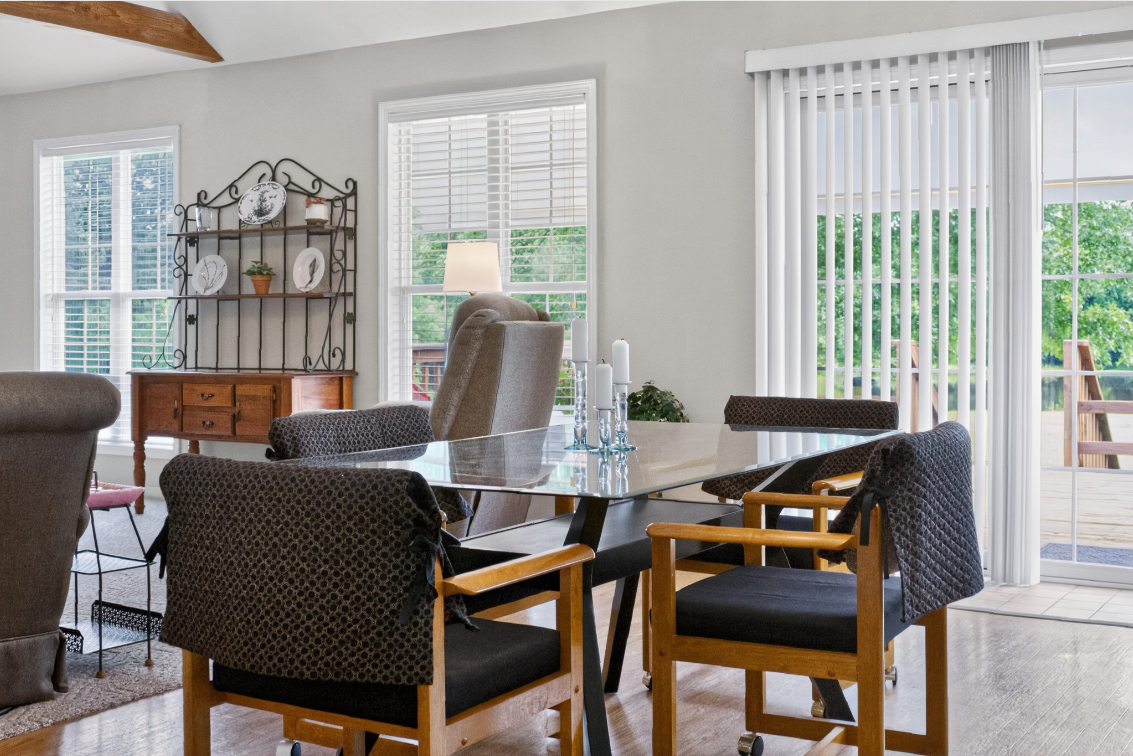
Frequently asked questions about real estate photography.
How Much Should I Expect to Pay for Real Estate Photography?
If you’ve ever looked at real estate photography pricing and thought, “Why does one photographer charge $75 and another charge $400?” congratulations. You’ve discovered one of the many strange little economies humans have created. Much like airport water bottles and wedding cakes, pricing can vary widely depending on what’s included.
The truth is, real estate photography is an investment in how your home is presented online. In today’s market, buyers usually decide whether they’re interested in a property before they ever step foot inside. Your listing photos are your first showing. If the photos are dark, blurry, crooked, or taken on a phone from waist height like a crime scene reenactment, buyers scroll right past.
Professional photos help homes look brighter, cleaner, larger, and more inviting. They also help agents build trust and look more professional to potential clients. Better marketing creates better attention. Shocking concept, apparently.
So… what should you expect to pay?
In southwest Missouri and surrounding areas, most real estate photography sessions typically range anywhere from $100 to $500+, depending on:
- The size of the property
- The number of photos needed
- Whether drone photography is included
- Video walkthroughs or reels
- Floor plans
- Twilight edits
- Travel distance
- Turnaround time
At Maeve Captures, I keep my pricing straightforward and affordable while still delivering professional, polished content that helps listings stand out.
Do I Need to Prepare the Home Before a Real Estate Photo Shoot?
Yes, and it makes a noticeable difference. A well-prepared home photographs cleaner, brighter, and more inviting—which ultimately helps attract more interest online.
Basic preparation usually includes tidying up surfaces, removing clutter, turning on lights, opening blinds, and making sure beds and main living areas look neat and intentional. The goal is to let the space itself stand out, not the laundry pile or the collection of half-used coffee mugs staging a quiet rebellion on the kitchen counter.
You don’t need to stage the home like a magazine spread, but small adjustments go a long way. A prepared home allows the photography to do what it’s supposed to do: highlight the space clearly and make it feel welcoming to potential buyers scrolling through listings.
What Questions Should I Ask a Real Estate Photographer Before Hiring?
Hiring a real estate photographer is a little like hiring a first impression. Dramatic, yes. True, unfortunately, also yes. Before a buyer ever steps inside a home, they’ve already decided how they feel about it based on the listing photos. Humans will spend $600,000 because the kitchen looked “light and airy.”
That’s why it’s important to ask the right questions before hiring a photographer. A good real estate photographer should do more than just show up with a camera. They should understand lighting, angles, editing, marketing, and how to make a property feel inviting while still keeping the listing accurate and professional.
One of the first questions to ask is what’s included in the package. Some photographers only deliver basic interior photos, while others offer drone photography, video walkthroughs, floor plans, twilight edits, or social media content. Depending on the property, those extras can make a major difference in how the listing performs online. For example, large properties and land listings benefit heavily from drone photos because buyers can actually understand the layout and scale instead of staring at random grass from ground level, wondering where anything is.
You’ll also want to ask about turnaround time. In real estate, timing matters. A home sitting without photos can lose momentum quickly, especially in competitive markets. Fast delivery without sacrificing quality is important because agents often need listings live as soon as possible. Ask how the images are delivered, how many photos are included, and whether the images are sized correctly for MLS and social media use.
Another important question is editing style. Real estate photography should look bright, clean, and true to life. Over-editing can make homes look fake, while under-editing can leave rooms looking dark and flat. Ask to see a full gallery instead of just highlight images on social media. Anyone can post five good photos. The real test is whether they can make an entire property look polished and consistent from start to finish. Brutal little industry secret there.
Communication matters too. Ask how booking works, how scheduling is handled, and what happens if weather or timing changes. A photographer who is organized and easy to work with makes the entire process smoother for both agents and homeowners. Real estate already has enough moving parts without adding “Where are the photos?” to the daily chaos.
Finally, ask whether the photographer understands marketing, not just photography. Great real estate images are designed to help listings stand out online, attract more clicks, and encourage showings. Professional photos can help homes appear more valuable, more trustworthy, and more memorable to buyers scrolling through endless listings at midnight while eating shredded cheese directly from the bag.
At the end of the day, the right photographer should help a property look its absolute best while making the process simple, professional, and stress-free. Good photos don’t just document a house. They help sell the story of living there.
How Many Photos Should I Expect From a Real Estate Shoot?
The number of photos depends on the size of the property, but most standard homes typically receive 25–40 edited images. Smaller listings may land closer to the lower end, while larger homes, luxury properties, or homes with extra features (like finished basements, outdoor spaces, or unique architecture) will naturally require more coverage.
The goal isn’t just quantity—it’s coverage. Every important space should be represented in a way that helps buyers understand the flow, layout, and feel of the home without overloading them with repetitive angles. A good real estate photographer focuses on selecting the strongest, most useful shots rather than just dumping hundreds of images into a gallery and calling it a day.
More isn’t always better. But missing key rooms definitely is worse.
Do Real Estate Companies Hire Photographers or Should I Hire Independently?
Short answer: both. Long answer: it depends on how much control, consistency, and sanity you want in your life.
Real estate companies, brokerages, and agents all handle photography differently. Some have in-house photographers, some contract agencies, and a lot just hire independent photographers per listing. Each option has pros, cons, and a surprising amount of “why is this more complicated than it should be” energy.
Do real estate companies hire photographers?
Yes. Larger brokerages and high-volume teams often work with either an internal media team or a preferred photography vendor. This usually means they’ve already chosen someone (or a small group) to handle all listings consistently.
The upside is obvious: consistency. Every listing looks cohesive, editing stays uniform, and scheduling is usually streamlined. Agents don’t have to scramble to find someone new every time they list a home, which is helpful when everything else in real estate is already a controlled chaos simulator.
The downside is flexibility. These setups can be rigid. You don’t always get to choose your photographer, style options might be limited, and availability can get tight during busy seasons when every agent suddenly remembers they “need photos tomorrow.”
Should you hire a photographer independently?
This is the more common route, especially for individual agents and smaller teams. Hiring an independent real estate photographer gives you control over quality, style, pricing, and turnaround times.
You get to choose someone whose work actually matches how you want your listings to feel online. Some photographers focus on bright and airy styles, others lean cinematic, and some specialize in extras like drone photography, video walkthroughs, or social media content. Independence means you can match the photographer to the property instead of forcing every home into the same visual template.
It also means faster communication. Instead of going through layers of approval or scheduling systems that feel like booking a flight to another planet, you’re dealing directly with the person holding the camera.
The tradeoff is consistency. If you don’t build a relationship with one photographer or small team, your listings can start to look slightly different every time. Not bad, just less cohesive branding.
Agency vs independent photographer: what’s actually better?
Agencies can be great if you want structure and repeatable results. They’re often used by large brokerages that prioritize efficiency over customization.
Independent photographers are better if you care about storytelling, marketing impact, and tailoring each shoot to the property itself. Especially for agents who want listings to stand out online, independent work usually delivers more flexibility and creativity.
There’s also a practical middle ground: many agents build a long-term relationship with one independent photographer. That gives you the consistency of an “in-house” system without actually needing to hire in-house staff or deal with corporate scheduling systems that feel designed by someone who hates joy.
The real decision comes down to one thing
It’s not really “agency vs freelancer.” It’s whether you want photography to be a checkbox or a marketing tool.
Because here’s the truth that nobody writes on brokerage flyers: your photos are often the first showing. Before a buyer ever schedules a visit, they’ve already decided how serious the home feels based on how it looks online. That’s not poetic. That’s just how modern attention spans work.
So whether a company hires photographers internally or you hire independently, the goal stays the same: make the property look like somewhere people want to step into, not scroll past.
What Is the Turnaround Time for Real Estate Photography?
Turnaround time for real estate photography usually falls somewhere between 24 hours and 72 hours, depending on the photographer, workload, and what’s included in the shoot.
Some photographers offer same-day delivery for basic edits, but that’s more of a “they haven’t slept and probably don’t believe in personal boundaries” situation than the industry standard. Most professionals aim for next-day delivery or within two business days so they can properly edit lighting, color balance, and consistency across the entire gallery.
For larger packages that include things like drone images, video walkthroughs, or floor plans, turnaround can stretch closer to 48–72 hours. More moving parts means more editing time, and good editing is what separates “here are some photos” from “this house might actually sell faster because of these photos.”
Where a 24-hour turnaround fits in
A 24-hour turnaround is actually strong in this industry. It signals efficiency and systems in place, not rushed work. When done well, it becomes a real advantage for agents because listings can go live almost immediately after the shoot.
Fast delivery matters more than people admit. A property sitting without photos is basically invisible online, and every extra day delays showings and momentum. So a reliable 24-hour turnaround isn’t just convenient, it’s a marketing edge.
The key expectation, though, is consistency. Fast delivery only works if quality doesn’t drop. Clients care less about how fast and more about fast without chaos lighting and crooked horizons that make the house look like it’s sliding downhill.
What clients should actually look for
Instead of only asking “how fast,” good clients also ask:
- Is the turnaround consistent?
- Is editing included or outsourced?
- Are images MLS-ready upon delivery?
- What happens if the shoot is larger than usual?
Because speed is impressive, but predictable speed is what actually builds trust.
A strong workflow usually looks like this: shoot done → same-day backup and selection → editing overnight → delivery within 24 hours. Clean, simple, repeatable.
So yes, 24-hour turnaround is solid. Not magic, not suspiciously fast, just efficient enough to make agents wonder why everyone isn’t working that way already.
What Happens If Weather or Lighting Conditions Aren’t Good?
Weather happens. Unfortunately, it does not care about your listing schedule.
If conditions aren’t suitable—heavy rain, snow, extreme overcast, or lighting that makes everything look like a mystery thriller—the shoot may be rescheduled to ensure the property looks its best. Real estate photography relies heavily on natural light, especially for exterior images, so waiting for better conditions usually leads to a significantly better result.
Interior photos can still be completed in less-than-perfect weather, but exteriors are where patience pays off. A good photographer will prioritize quality over forcing a shoot that ends up looking flat, dull, or like the house is emotionally going through something.
Want an expert?
Maeve Captures
Real Estate Photography